
Not sure what first aid you need for your workplace? Take the 3 minute compliance check

Product details

Description
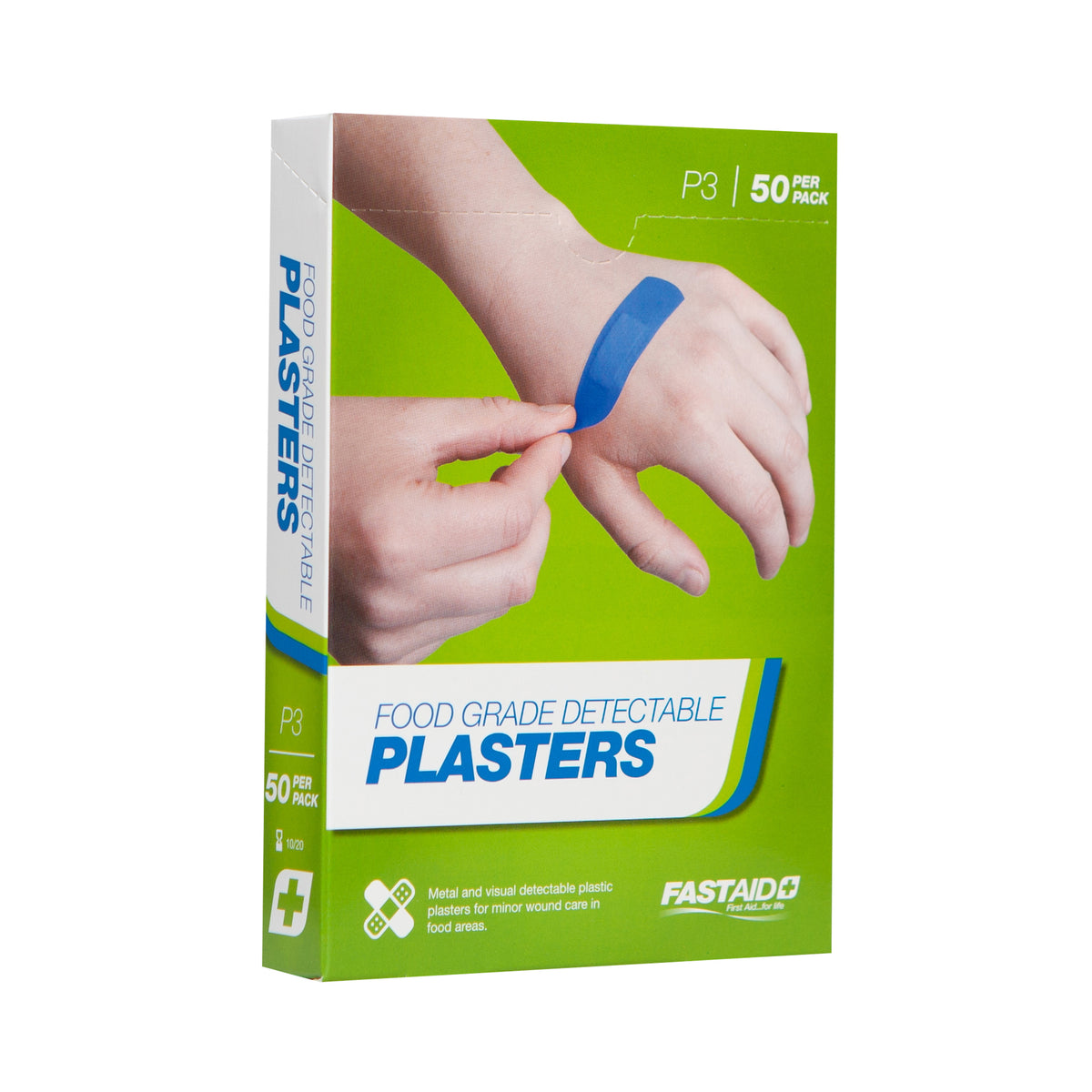
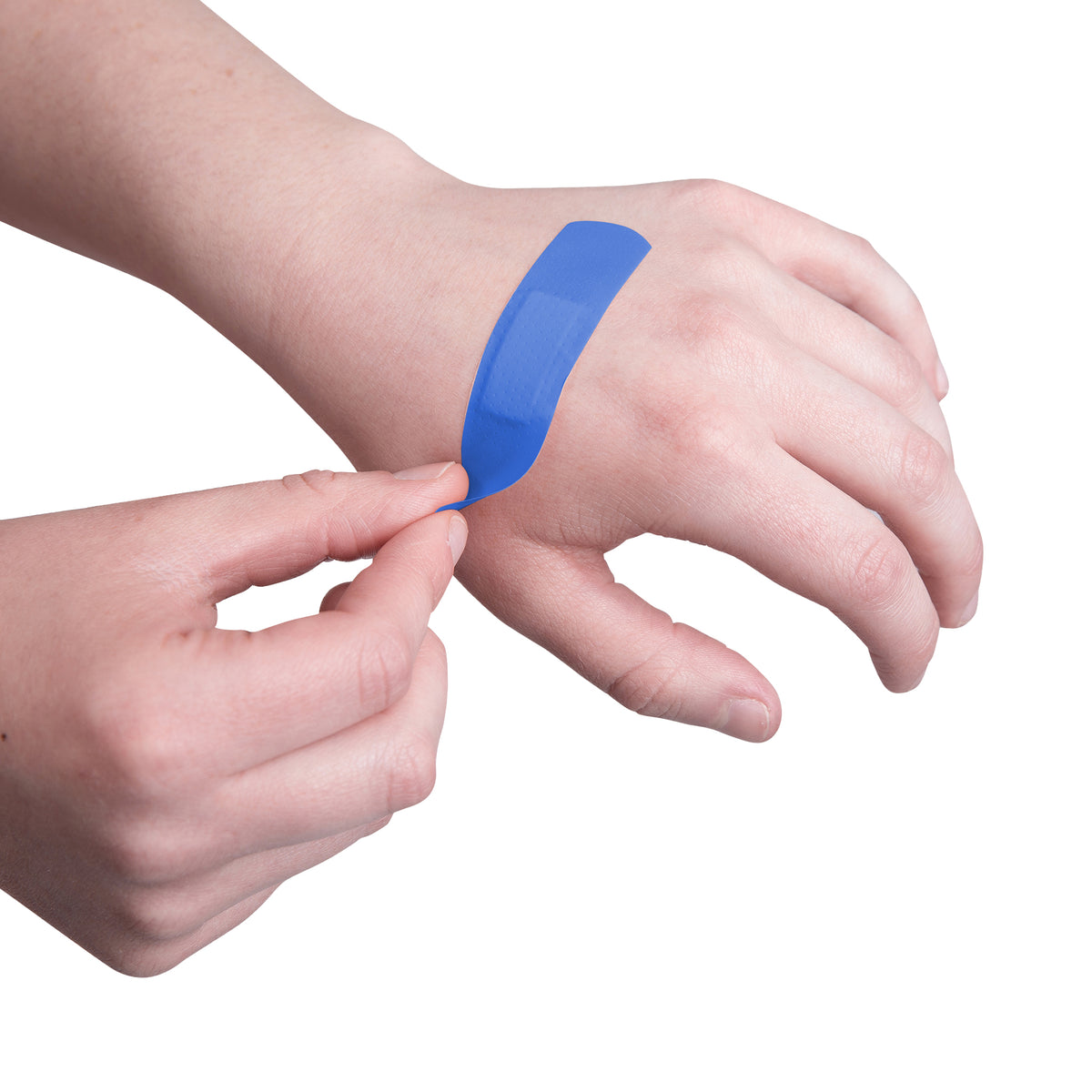
  • Metal and visual detectable blue plasters
  • Ideal for any food preparation or production area
  • Flexible with durable long-lasting adhesive
  • Non-stick dressing pad
  • Easy to open retail box

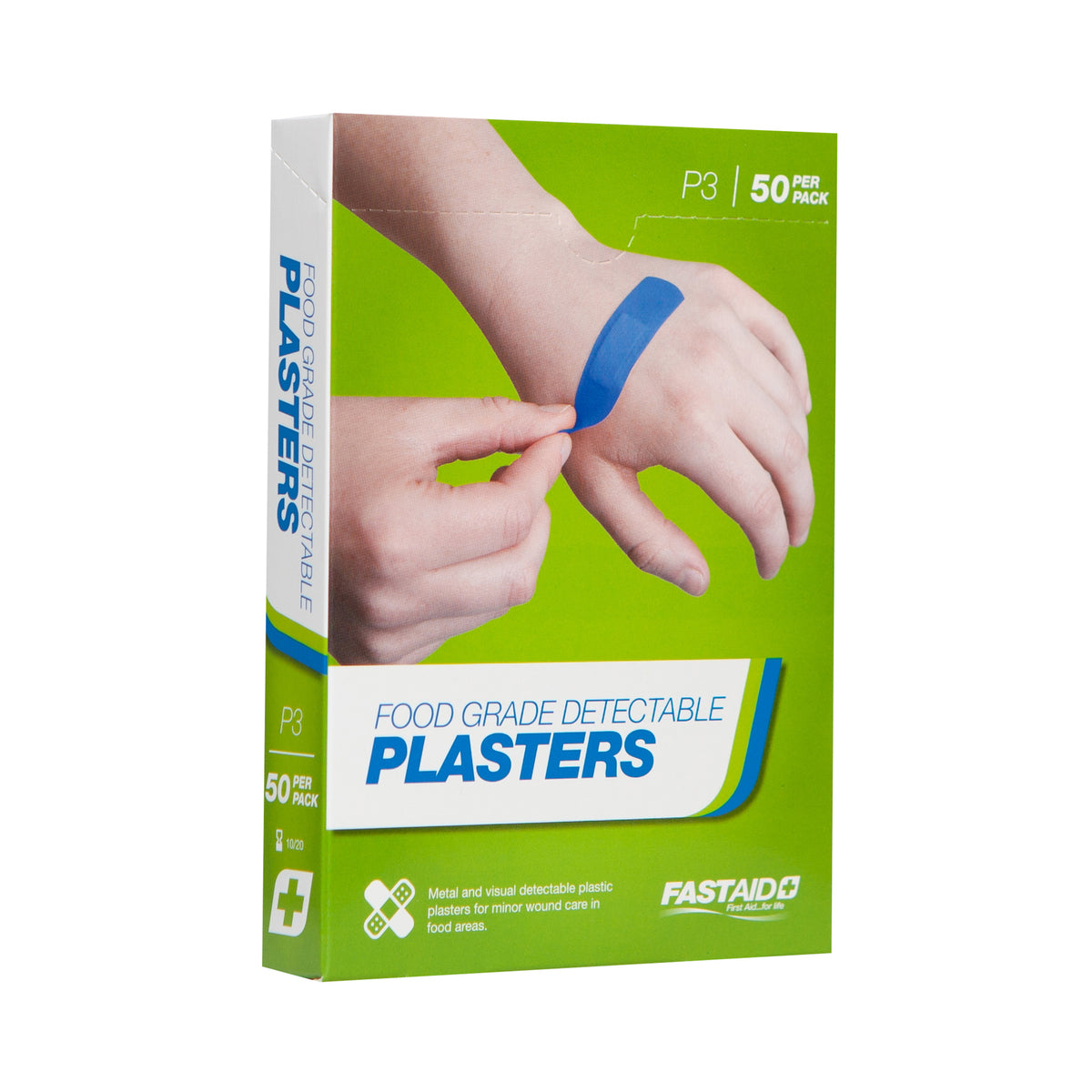
FastAid's blue food grade plasters are metal and visual detectable plasters designed for use in food preparation and production areas to ensure compliance with food safety standards.

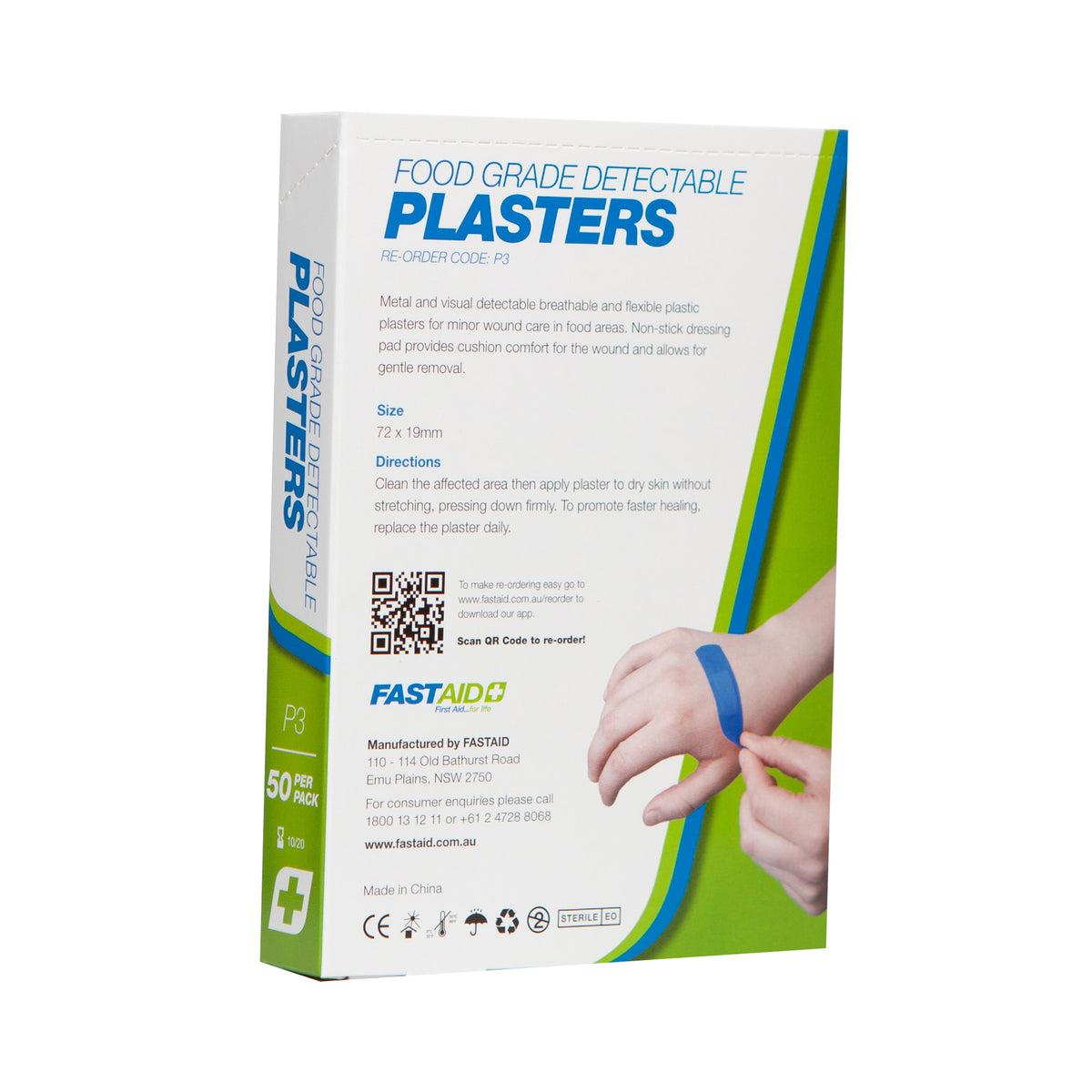
Our plasters are breathable and flexible plastic plasters suited for minor wound care. Non-stick dressing pad provides cushion comfort for the wound, while allowing for gentle removal.

Contains 50 blue plasters with a size of 72 x 19mm each packed in individual sterile paper pouches.

Packed in FastAid's unique colour coded retail packaging, complete with easy-to-open box perforation. Also compatible as a refill for FastAid's Easy-Refill™ First Aid Kits.

Contents

Specs
GENERAL
CodeP3
Weblinkhttps://fastaid.com.au/products/p3
ColourBlue
Minimum Order Quantity
Warranty
Attracts GSTYes
Batch TrackedNo
Expiry TrackedNo
Serial TrackedNo
 
COMPLIANCE
TGA Registered No.332710
ISO9001 CertifiedYes
WHS Workplace CompliantNo
Main Material Product
Timber or PulpNo
Type of Wood
Dangerous GoodsNo
HS (Tariff) Code
UNSPSC Code
Country of OriginChina
 
EACH (EA)
Product Dimensions10 (W) x 14 (H) x 2 (D) cm
Dimensions (w/ Packaging)10 (W) x 14 (H) x 20 (D) cm
Cubic0.0028 m³
Product Weight
Weight (w/ Packaging)
Packaging Weight
Packaging Material
Recycled Packaging Content %
Barcode19345392009919
 
INNER (INR)
Dimensions
Cubic
Weight (w/ Packaging)
Packaging Weight
Packaging Material
Recycled Packaging Content %
Barcode
 
CARTON (CTN)
Dimensions52 (W) x 31 (H) x 23 (D) cm
Cubic0.037076 m³
Weight (w/ Packaging)
Packaging Weight
Packaging Material
Recycled Packaging Content %
Barcode
 
PALLET (PLT)
Qty per Pallet0
Cartons per Layer
Layers per Pallet
Weight (w/ Packaging & Pallet)
 
Intended Purpose
Intended purpose

A flexible band (of fabric, plastic, paper, or other material) coated on one side with a pressure-sensitive adhesive and possibly with an absorbent pad, typically used to cover a superficial wound.

Health Warning
Always read the label and follow the directions for use. Single use only.

Frequently Asked Questions

What are FastAid Food Grade Detectable Plasters?
FastAid Food Grade Detectable Plasters are designed for use in food preparation, catering, hospitality, food processing and food manufacturing environments where foreign body contamination controls form part of a site's food safety program. Applicable products include P3 Food Grade Plasters Metal & Visual Detectable 50pk, P14 Food Grade Plasters Metal & Visual Detectable 100pk, and P15 Food Grade Fingertip & Knuckle Plasters Metal & Visual Detectable 50pk.
What makes these plasters suitable for food handling environments?
FastAid Food Grade Plasters feature a bright blue backing for enhanced visual identification and contain an embedded aluminium foil detectable element beneath the wound pad. The combination of visual and metal detectability assists food businesses in managing foreign body contamination risks within their food safety programs.
Are these plasters HACCP or GMP certified?
No. HACCP and GMP certification apply to a food manufacturer's food safety system and processes rather than to an individual plaster product. FastAid Food Grade Plasters are designed for use in HACCP-based and GMP-controlled food handling environments and may be incorporated into site-specific foreign body control procedures.
What makes the plaster detectable?
Each plaster contains an embedded aluminium foil detectable element located beneath the absorbent wound pad. The foil is approximately 90-92gsm, 0.06-0.065mm thick, and is sized to match the absorbent wound pad. The detectable element is intended to assist identification by appropriately calibrated food industry metal detection systems.
Are the plasters guaranteed to be detected?
No. Detection performance depends on factors including metal detector type, sensitivity settings, product composition, packaging materials, conveyor speed, detector aperture size and the orientation of the plaster within the inspection field. For this reason, no detectable plaster can be guaranteed to be detected under all operating conditions.
Do these plasters only work with aluminium detection systems?
No. Modern food industry metal detectors are generally designed to detect a variety of metallic contaminants, including ferrous, non-ferrous and stainless-steel materials. Aluminium is a non-ferrous metal and may be detected by appropriately calibrated food industry metal detection equipment.
Has FastAid conducted independent metal detectability testing on these plasters?
Generally, independent metal detectability testing is not an industry expectation for detectable plasters because there is no single testing method that can replicate every food manufacturing environment. Detection performance can vary significantly depending on the food product, packaging materials, line speed, metal detector technology, aperture size and sensitivity settings used by the food manufacturer. As a result, suitability is typically assessed by the food manufacturer within their own production process as part of their food safety and HACCP validation activities.
Should food manufacturers conduct their own validation testing?
Yes. Food manufacturers are responsible for determining whether any detectable product is suitable for use within their production environment and food safety program. Validation should consider factors such as food type, packaging materials, production line configuration, conveyor speed, metal detector or X-ray inspection technology, detector sensitivity settings and HACCP risk assessment requirements. Customers should verify that FastAid Food Grade Detectable Plasters can be effectively identified using their own equipment and operating conditions.
Why are blue detectable plasters used in food manufacturing?
Blue detectable plasters provide two layers of contamination control. Firstly, the bright blue colour is highly visible and assists in identifying a lost plaster during production. Secondly, the embedded aluminium foil is designed to assist detection by food industry metal detection systems. Together, these features support foreign body contamination control procedures commonly used within food processing and food handling environments.
Are FastAid Food Grade Detectable Plasters suitable for all food manufacturing applications?
FastAid Food Grade Detectable Plasters are designed for use across a broad range of food handling and manufacturing applications. However, because every production environment is different, customers should determine suitability based on their own processes, products, packaging formats, inspection equipment and food safety requirements.
Is there a product disclaimer I should be aware of?
FastAid Food Grade Detectable Plasters incorporate an embedded aluminium foil detectable element designed to assist identification by appropriately calibrated food industry metal detection systems. Detection performance may vary depending on equipment type, sensitivity settings, product characteristics, packaging materials and operating conditions. Users should validate suitability within their own production environment as part of their food safety and HACCP procedures.
Where can I find more information about food safety programs and metal detection?
The following resources provide additional information regarding food safety programs, HACCP principles and food industry metal detection systems: https://www.foodauthority.nsw.gov.au/industry/audits-and-compliance/food-safety-programs-haccp | https://www.mt.com/au/en/home/products/Product-Inspection_1/safeline-metal-detection/food-industry-metal-detection.html | https://www.andinspection.com.au/products/service-validation/ | https://diverseco.com.au/wp-content/uploads/2024/09/FortressGuide_MetalDetection_Food-Industry.pdf