
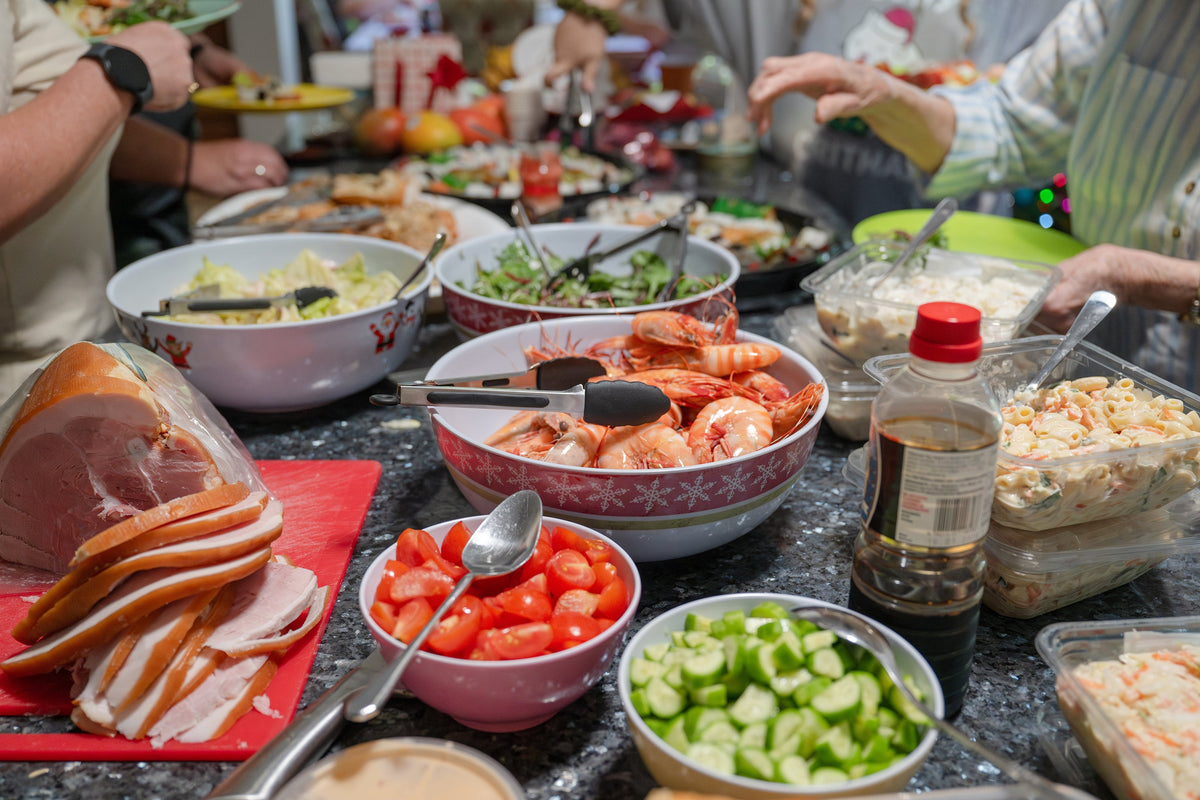
The holiday season means more cooking, more carving and more hands in the kitchen. Sharp knives, broken glass and a busy bench are a recipe for cuts. Most are minor and easy to treat at home, but it pays to know what to do, and when to get help.
First, look after yourself
Wash your hands, or put on disposable gloves if you have them, before you treat someone else’s cut. Then sit the person down.
Stop the bleeding
- Press firmly on the wound with a clean dressing or pad.
- Keep the pressure on until the bleeding stops. Don’t keep lifting the pad to check.
- If blood soaks through, put another pad on top and keep pressing. Leave the first one in place.
Clean and cover
- Once the bleeding has stopped, rinse the cut gently with clean running water.
- Pat the skin around it dry.
- Cover it with a plaster or a sterile non-stick dressing.
- Keep it clean and dry, and change the dressing if it gets wet or dirty.
When to get help
Call 000 if the bleeding is severe or won’t stop with firm pressure.
See a doctor if the cut:
- is deep or gaping, or the edges won’t stay together
- was made by something dirty or rusty
- has something stuck in it (don’t pull it out)
- is on the face, or over a joint
- shows signs of infection over the next few days, like redness, swelling, heat or pus
Not sure if your tetanus shot is up to date? Ask your doctor.
Cut down on cuts
- Keep knives sharp. A blunt knife slips more easily.
- Cut away from your body, on a board that doesn’t slide.
- Sweep up broken glass straight away, and wrap it before it goes in the bin.
- Keep a first aid kit in the kitchen, where everyone knows to find it.
Is your kit ready for the holidays?
Check it has plasters, dressings and gloves, and top up anything that’s been used during the year. FastAid kits and refills are available from stockists across Australia.
Find a FastAid stockist near you
This is general first aid information only. In an emergency, call 000.


Share:
Spotting a hypo: what to do when blood sugar drops
Your summer holiday safety guide